How to Get Rid of Junk: Best Junk Removal Options Explained
Discover effective junk removal tactics, from professional hauling to dumpster rentals, for clearing spaces efficiently and sustainably.
Giving usable items away is cheapest, followed by hauling them to a transfer station yourself. Hiring a crew costs more but saves time and labor.
The right choice depends on what you are getting rid of, how much there is and how fast you need it gone. A single old couch, a garage full of boxes and a renovation pile each call for a different method. In Colorado Springs the choice matters a little more, because residents generally use private trash haulers instead of a city bulk pickup, so large items often need a separate plan. This guide walks through five options, what each one costs and where each one fits.

Option 1: Donate or Give It Away
If something still works and is clean, keeping it out of the landfill is the cheapest and most useful choice. In Colorado Springs, Pikes Peak Habitat for Humanity ReStore offers free pickup for qualifying donations that include at least two items. It takes furniture like couches, dressers and tables, but it cannot accept mattresses, box springs, or anything that is damaged or has an odor, so read its accepted list before you schedule.
Online marketplaces and neighborhood groups also work for items you would rather sell or give away. A "free" sign at the curb can move things fast in a busy neighborhood, though weather and local rules affect it. Take clear photos and mention any flaws when you list an item. Honest listings mean fewer people arrive and then refuse it, which leaves the item right where it started.
If you have a lot to donate and no way to move it, our donation service can handle the loading and drop off.
Option 2: Haul It Yourself to a Transfer Station
If you own a truck or trailer and have a helper, self-hauling is usually the cheapest way to dispose of things that cannot be donated. Woodmen Dump on Cliff Allen Point, for example, lets you drive in, weigh, unload and pay by weight, with no minimum. It accepts trash, steel, mattresses and major appliances, and it does not require an appointment.
The tradeoff is your own time and effort. You do all the lifting, you may need more than one trip, and you have to cover the load for the drive. Check the facility's hours and accepted items before you go, and keep your receipt.
Option 3: Rent a Dumpster
A roll-off dumpster fits renovations and multi-day cleanouts. The company drops a container in your driveway, you fill it at your own pace, and they haul it away when you finish. A 10 yard container is usually enough for a small room cleanout, while a 40 yard container is meant for major construction or gutting a whole house. Angi puts dumpster rental at roughly $290 to $480 nationally, and the price depends on size, days and weight.
Dumpsters have limits. You do all the loading, there are weight limits, and a dumpster on a public street may need a permit. Items like paint, tires, batteries, electronics and appliances with refrigerant usually cannot go inside.
Option 4: Ask Your Trash Provider About Bulky Pickup
Colorado Springs residents generally contract with private trash companies, so bulky pickup depends on your provider. Some include a limited number of large items, some charge per item, and mattresses often need a scheduled collection with an extra fee. Items left out without an appointment are typically not picked up.
Call your provider first and ask what they accept, what it costs and when to set items out. This works well for one or two large items and poorly for anything bigger.
Option 5: Hire a Junk Removal Crew
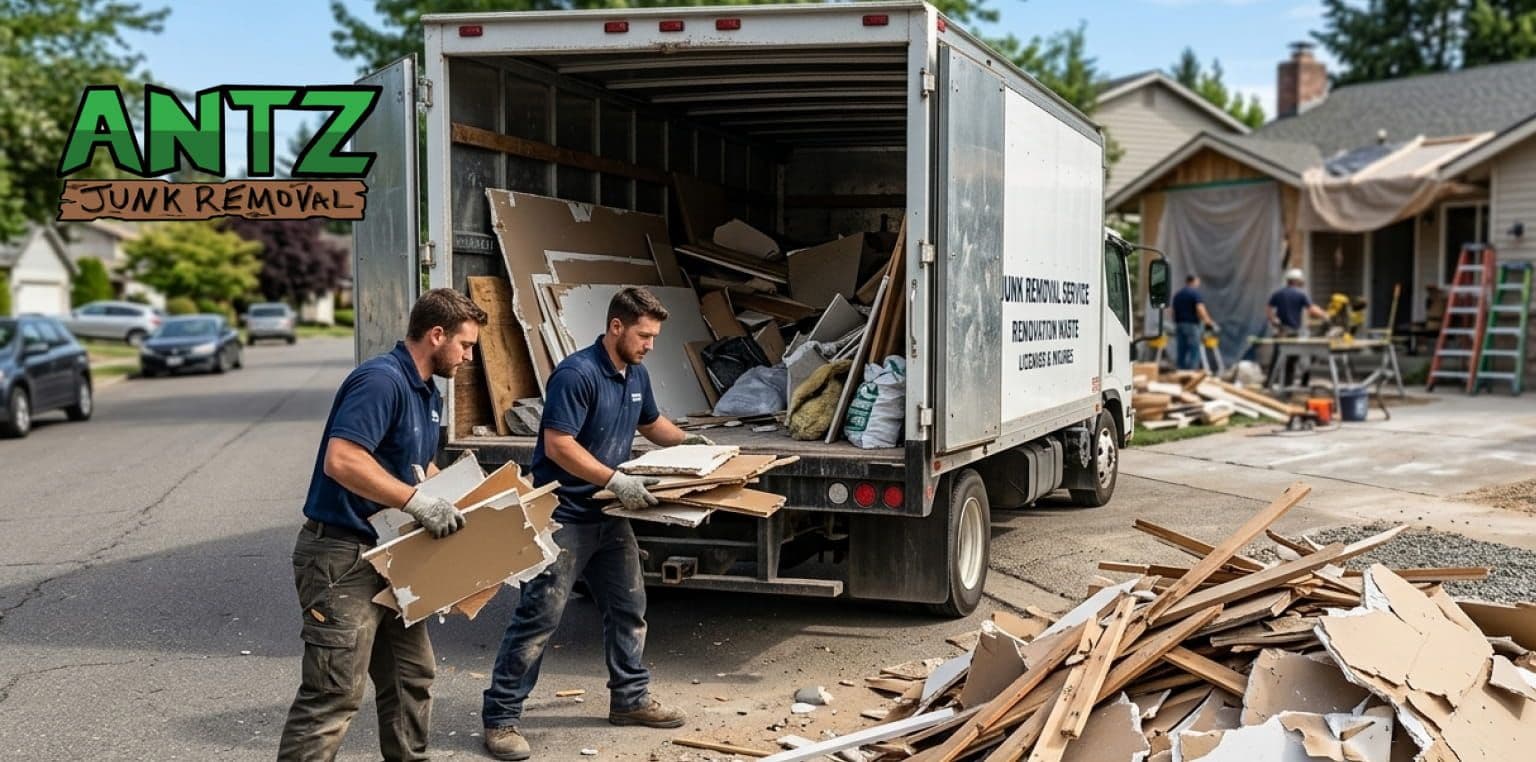
A crew comes to your property, lifts everything, loads it and hauls it away. It is the fastest option and the only one that needs no truck, no dump run and no heavy lifting from you. It fits large volumes, heavy furniture, tight deadlines, hard to reach spaces and anyone who cannot do the lifting.
At Antz, we price by how much of our dump trailer your items fill.

You can see everything on our junk removal pricing page, and our Colorado Springs junk removal cost guide explains what changes a quote. For a national reference, Angi lists professional junk removal at about $130 to $370.

What Cannot Go in a Dumpster or a Regular Load
Paint, oil, pesticides and other chemicals need a hazardous waste drop off. Take them to the El Paso County Household Hazardous Waste Facility, and check its rules and hours before you go.
Old TVs and computers should be recycled, not thrown out, and our e-waste removal service can take them. Refrigerators, freezers and window air conditioners hold refrigerant and need special handling, so tell any crew about them when you call, or see our appliance removal service.
How to Choose in Three Questions
Can it still be used? If yes, try donation first.
Can you move it yourself? If you have a truck and a helper and the load is manageable, a dump run is the cheapest disposal.
How much time do you have? If a closing date, a move or a deadline is close, waiting for a charity pickup or a scheduled bulky day is risky. A crew is worth the price when speed and effort matter.
A small pickup can also cost less than renting a truck and paying dump fees, so compare a real quote before you assume a crew is the expensive choice.
Getting Ready for a Crew Visit
Clear a path from the items to the door and the driveway
Keep pets and children in a safe area
Turn on lights in basements and attics so the crew can see
Group small items into boxes or bags to speed up loading
Point out anything that should stay, especially if only part of a room is being cleared
How to Get Rid of Junk FAQs
What is the cheapest way to get rid of junk?
Giving usable items away is cheapest, followed by hauling them to a transfer station yourself. Hiring a crew costs more but saves time and labor.
How can I get rid of junk for free?
Donate usable items to a charity with free pickup, list them free online, or try a curb alert. Broken items usually cost to dispose of.
What is the cheapest junk removal in Colorado Springs?
It depends on the job. Compare quotes for what is included. A small pickup can cost less than a truck rental plus dump fees.
What is included in a $99 junk removal service?
Ask first. Low prices often cover only a small load, so check whether loading, hauling, disposal and fees for mattresses or fridges are included.
Is it cheaper to rent a dumpster or hire a junk removal service?
For a large amount of heavy debris that you will load yourself, a dumpster can cost less. For a few large items, a crew's minimum price is usually cheaper and saves a lot of time.
Can I put construction debris in my regular trash?
Generally no. Concrete, brick and drywall are too heavy for standard trash service, so use a dumpster or a hauling crew.
Ready to Skip the Heavy Lifting?
Call (719) 922-0428 or email Info@antzjunkremoval.com and send a few photos. We will tell you the price before we start. We serve Colorado Springs, Monument, Black Forest, Fountain, Castle Rock, Larkspur and Woodland Park.