Shed Demolition vs. Shed Removal: What’s the Difference?
Removing a shed is the removal of a detached shed, whereas shed demolition is demolishing the shed on the property. Many jobs involve a combination of both: a rotted shed is knocked down before being hauled out. Overall, a licensed shed removal service can complete all of the above within a single visit.
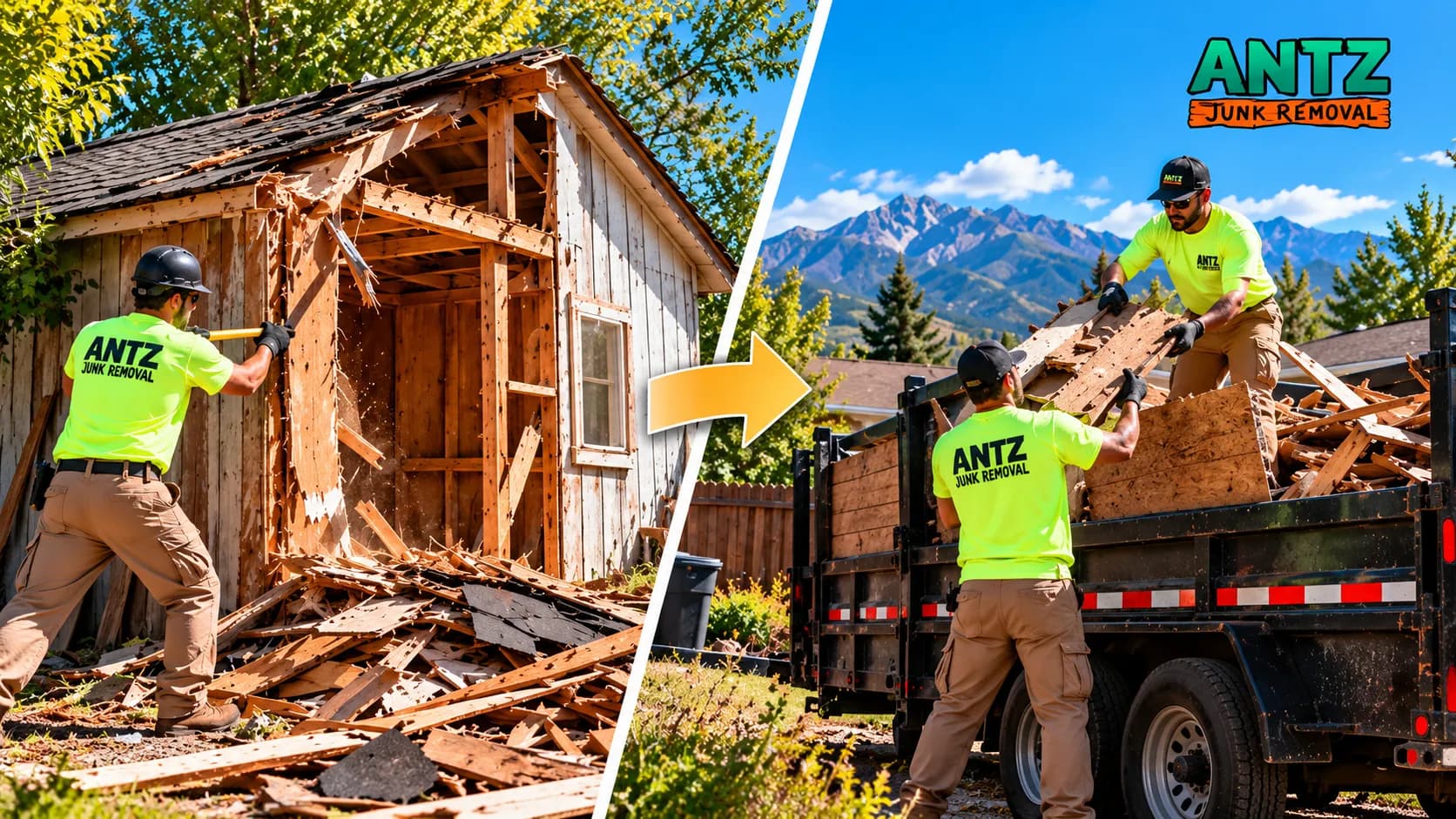
Removing a shed is the removal of a detached shed, whereas shed demolition is demolishing the shed on the property. Many jobs involve a combination of both: a rotted shed is knocked down before being hauled out. Overall, a licensed shed removal service can complete all of the above within a single visit.
Not sure whether your shed needs demolition or removal? This article explains the key differences and covers local permit requirements and safety considerations to help you choose the right approach.

How Does Shed Removal Differ From Tearing Down a Shed?
Demolition destroys the shed. Removal gets it and its debris off your lot. People use the two words loosely. A crew that smashes a shed and hauls the pile away did both in one visit. A crew that unscrews every panel and carries them out did dismantling only.
For related reading, explore our Guide to Junk Removal Services to learn more about professional junk removal and disposal options.
What Does Shed Dismantling Involve?
Shed dismantling involves tearing down a shed in reverse order of how it was constructed in. Doors and windows, roof sheets and wall panels remain intact. The resin and prefab metal sheds are ideal for this approach as they can be bolted together. There is a way to donate or reuse sound lumber rather than landfill.
What Counts as a Shed Teardown?
A shed teardown is the faster and rougher method. Crews pry and cut and break the frame into pieces that fit a trailer. Wood sheds with soft sills or sagging roofs usually end up here. Years of Front Range hail and strong high altitude sun leave many sheds too brittle to unscrew anyway.
Demolition or Removal: Which One Fits Your Shed?
Pick demolition for dangerous sheds. Pick removal with disassembly for sound sheds that still have usable parts. The shed demolition vs shed removal choice comes down to the shed’s condition and what you plan to put on the pad next. The table shows how the two compare.

A leaning plywood shed fits the demolition column. A resin shed that still locks fits the removal column.
Tip: Stick a screwdriver in the bottom of a wall. The tip will sink easily if the wood is rotted; dismantling will not be successful.
How Do the Two Jobs Run on Site?
Both jobs work from the top to the bottom. Demolition ends in a debris pile and removal ends in a loaded trailer and an empty pad.
What Is the Shed Demolition Process?
The process of demolishing the shed can be done in 6 steps:
Vacuum the shed and check for wasps and frayed electrical wires.
Turn off the electricity or water to the shed.
Strip the doors, windows and shingles.
Take down the roof framing before touching the walls.
Set the walls down, one section at a time, starting at the top.
Give a heave on the floor and remove all nails.
Bonus Tip: Sweep over the grass with a magnetic sweeper twice. In lawns, there are stray nails, which get in tires and bare feet.
What Is the Shed Removal Process?
The shed removal process with a crew is shorter on your end:
Send photos or book a visit for a quote.
The crew inspects the shed and picks dismantling or teardown.
The crew empties the shed and disassembles it.
Any parts of the shed that can be used are saved for donation or recycling.
Debris loading and hauling and sweeping the pad.
Does a Shed in El Paso County Need a Permit or an Asbestos Check?
Possibly both, so confirm before you swing a hammer. Colorado Springs, Monument, Fountain, Woodland Park, and parts of El Paso County fall within the Pikes Peak Regional Building Department’s jurisdiction. Small sheds may not require a building permit, depending on applicable requirements. Confirm current size limits, zoning setbacks, and HOA rules before starting work.
Asbestos is another important consideration. According to Colorado Regulation No. 8, Part B – Asbestos Control, applicable demolition projects may require asbestos inspections and advance notification. Ask the relevant authorities whether these requirements apply to your shed. Older sheds with vinyl floor tiles or tar-paper roofing deserve particular attention before demolition begins.
How Do You Handle Utilities and Debris Without Getting Hurt?
Shut off and cap every service line first. Then wear eye and lung protection, gloves, and sturdy boots. Before demolition begins, follow OSHA’s demolition safety requirements, which cover utility disconnections and structural surveys by a competent person.
Call 811 before digging out a footing or slab to help identify underground utilities and prevent damage. Power lines may run underground to workshop sheds. As you work, separate wood, metal, roofing, and concrete into different piles for appropriate disposal or recycling.
Pro Tip: Take photos of the shed and surrounding lot; this will serve as a Pro Tip for later. Later fence or lawn claims are taken care of by photos.
Where Do Shed Materials Go After the Crew Leaves?
The usable parts are donated and the rest are sorted for recycling and disposal. Crews break down clean lumber and metal panels, roofing and concrete into separate loads. Clean wood and metal move to recycling more easily than a mixed pile does.
Doors and windows and sound lumber can go to donation. Painted wood and old shingles usually go out as waste. Ask the crew what they plan to salvage before they start.
Should You Handle It Yourself or Hire a Crew?
Small and sound sheds suit DIY. Large or wired or rotted sheds suit a crew.
When Does a Shed Removal Service Make Sense?
A shed removal service charges for services when the shed is larger than a compact car, located on a slab or has electricity connected to it. Crews bring the trailer so you skip the dump runs. Roofs and walls can fall in unplanned directions and a second pair of hands matters.
What Changes the Price of a Shed Job?
Price follows size and material and foundation and access and debris volume. A metal shed on skids takes less labor than a brick shed on a slab. A long carry from a back lot adds time. Photos let a crew quote before the visit. You can review the company's pricing information when comparing your options.
Tip: Take the footprint measurement and take photographs of all 4 sides and the access road to the road before phoning.
What Do Colorado Springs and Monument Yards Add to the Job?
Snow and slopes and long driveways change how crews work. Plan around them. Winter drifts can bury a shed door so someone shovels before anything else starts. When the ground is frozen, it is more difficult to pull the posts and skids. In some instances, large lots in Black Forest and Larkspur may result in a long way from the lot to the truck.
Gravel or soil can be used to fill in the void to prevent spring snowmelt against a fence. A number of subdivisions in Monument and Castle Rock have covenants on replacement sheds to check before removing a shed to be replaced. A wood shed that is getting old and is in the vicinity of the house is a fuel addition in wildfire prone areas like Black Forest. The first stride to defensible space is to clear.
Key Takeaways
Demolition is required to destroy and removal to haul away with many jobs.
Dismantle sheds to salvage and demolish sound sheds that are rotted.
Check permits from Pikes Peak Regional Building Department prior to confirming.
Contact the state health department for asbestos notice prior to demolition.
Call 811 before digging and shut off utilities.
Get Professional Shed Removal Help in Colorado Springs
Ready to clear an old shed from your property? Antz Junk Removal helps homeowners in Colorado Springs, Monument, and surrounding areas manage shed removal and debris hauling. Review the company's service areas for local coverage.
Contact the team through the contact page or at 719-922-0428 or email info@antzjunkremoval.com to discuss your project and request a quote.
Quick Answers About Demolishing and Hauling Away a Shed
These are the questions homeowners ask most often.
How much does it cost to demolish and remove a shed?
Cost depends on shed size, material, foundation, access and how much debris leaves the property. At the low end is a small wood shed on skids, and at the high end is a large slab shed. A free photo quote provides an actual number before any job is done.
How much should it cost to remove a shed?
A fair quote does not overlook the cost of labour, disposal, and hauling, or the slab work. Always compare quotes with equivalent scope, as one company might include slab, and another company might exclude it.
Can I demolish my own shed?
Yes, if the shed is small, stable, and there is no wiring or any suspect materials. Safety equipment, a ladder and a helper will be required. If sheds are large or the sheds have rotted, they can collapse unexpectedly, so hire a crew for large or rotted sheds.
How much would it cost to demolish a shed?
Demolition pricing follows hours on site and the weight of debris. Dismantling to save lumber can trim the hauled load. Slab or footing removal adds labor so confirm it is in the quote.
Do you need a permit to remove a shed?
Often not for a small detached shed but the answer depends on size and location. Pikes Peak Regional Building Department can confirm for your address. State asbestos notice rules apply to demolition of regulated facilities so ask about those too.
How much does it cost to demolish a 2000 sq ft house?
A shed is a different type of work from a house. The cost varies depending on foundation type, weight of hazardous materials and debris on site and access. Asbestos inspection is required prior to permits, so be sure to obtain written bids from licensed demolition contractors.
Do I need permission to demolish a building?
Yes. You need the owner’s approval and usually a permit from the building department. Utility disconnects, state asbestos notice, and HOA rules may also apply.
What are the three types of demolition?
Sources group them differently. One common split is manual demolition by hand, mechanical demolition with machines and implosion with explosives. Sheds call for manual work or light machines.
Conclusion
Choosing between shed demolition and shed removal depends on the shed’s condition, materials, and future use of the space. Demolition works best for rotted or unstable structures, while careful dismantling helps preserve reusable parts. Before starting, check local permit requirements, address utility connections, and plan for safe debris disposal.
Sources
1. Colorado Department of Public Health and Environment – Asbestos Support provides information about asbestos requirements, inspections, and regulations relevant to demolition projects.
2. OSHA – Preparatory Operations for Demolition (29 CFR 1926.850) explains demolition safety requirements, including structural inspections and controlling utility lines before work begins.
3. OSHA Technical Manual – Demolition covers demolition planning, hazard assessment, engineering surveys, and safety measures for protecting workers.