Shed Removal: What Homeowners Should Know Before Taking Down an Old Shed
Explore essential advice on shed removal, costs, and whether DIY or hiring professionals is best.
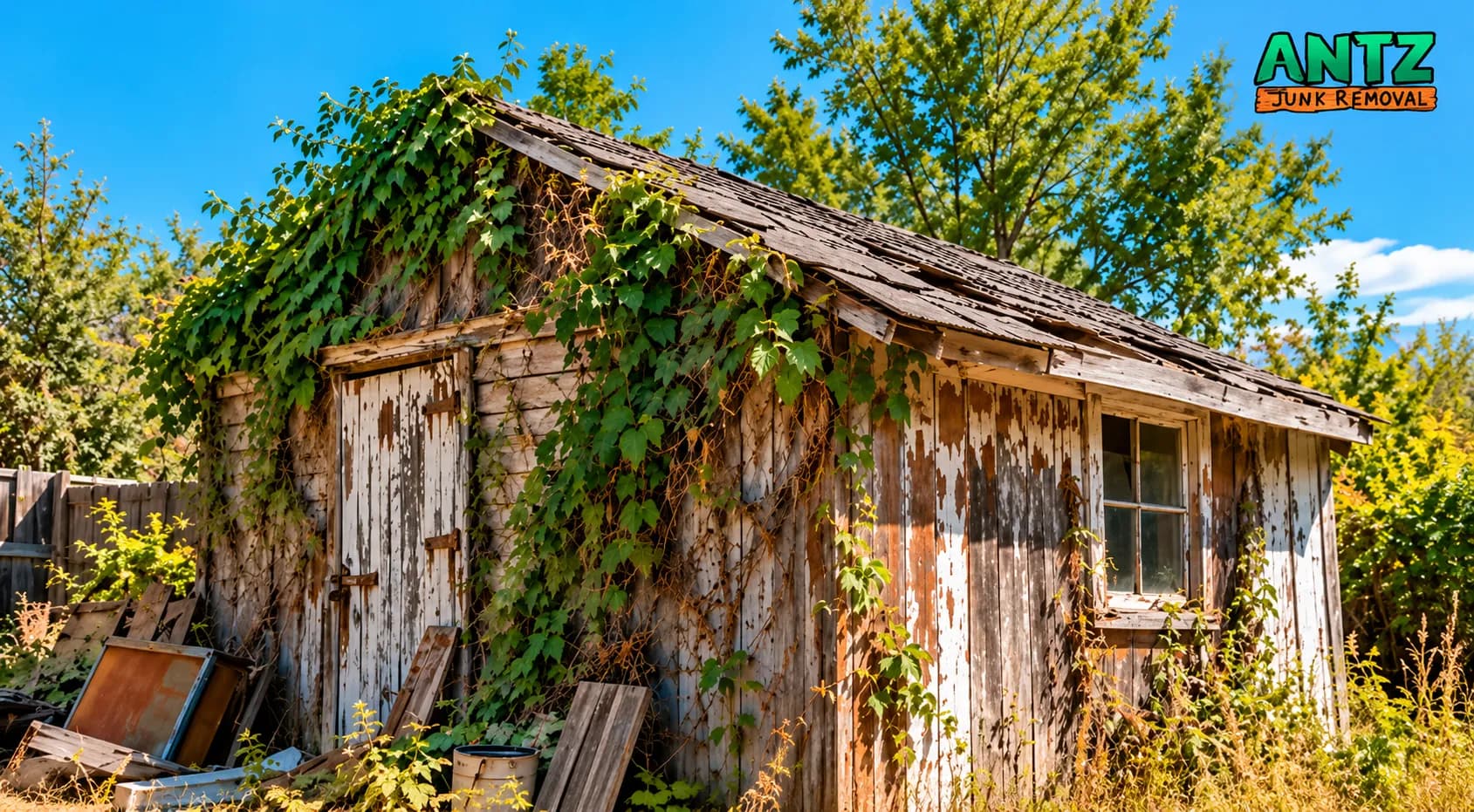
Your shed has been there for years. Maybe decades. It's seen weather systems roll through Colorado, collected junk you forgot about, and honestly? It's probably looking pretty rough these days.
The roof leaks when it rains hard. The wood is graying. You're thinking it's time to let it go. That's where a shed removal service comes in, and honestly, understanding what you're getting into before you start is half the battle.
At Antz Junk Removal, we've been helping Colorado homeowners navigate this exact decision for over 30 years. We've seen it all. The sheds that look like they'll fall over in a strong wind, the ones packed so full of stuff you need a forklift just to open the door, and the ones that started out beautiful and got beat down by Colorado weather.
We know what's involved, what usually goes wrong with DIY attempts, and what you should realistically expect when professionals handle it.
Understanding What Shed Removal Actually Means
Dismantling an old shed usually involves a few main steps.
First of all, you clear everything out of the shed.
Then you disconnect any utilities before taking the shed apart.
Finally, you deal with the foundation.
Each step can bring unexpected challenges if you are not prepared. The scope of your project matters enormously.
A small 8x10 wooden shed is basically a weekend job for professionals.
A 16x20 structure with a concrete foundation? That's different work entirely.
Add metal siding or a metal roof and the teardown changes.
Asbestos or old roofing materials? Now you're dealing with hazardous-material protocols.
Figuring Out If an Old Shed Needs to Go
Check the shed before you start. See daylight through the walls? That is a warning sign. A sagging roof is even worse. If the wood is badly rotted, dismantling it may be safer than trying to repair it.
Check the foundation carefully. Wooden piers that have sunk or shifted spell trouble. Concrete that's crumbling is another story entirely. These problems don't stay static. They get worse every year. A shed that's settling now may become much more difficult to work with in five years.
Sometimes the economics make the decision for you. A full restoration costs most of what a new shed would run. When repair costs hit 75% or more of replacement value, taking down the old structure and building a new one may make more financial sense than rehabilitation.
The Colorado Department of Local Affairs provides local government information that can help homeowners identify the appropriate department to contact about building requirements.
Why the Numbers Matter When Comparing Options
Here's where most people get surprised. DIY demolition costs way more than you'd think initially. Everyone assumes the labor is free, so the expense drops dramatically. Wrong.
You'll need tools. Basic demolition work requires pry bars, sledgehammers, saws, safety glasses, gloves, and possibly a respirator if there's any chance of hazardous dust. You're probably looking at $150–300 in tool purchases if you start from nothing.
Renting equipment adds up fast. A dumpster runs $300–800 depending on size and how many trips to the dump you need. Equipment rental, such as a jackhammer or air compressor if needed, runs another $100–200 daily. A weekend project suddenly hits $500–800 just in rentals and services.
Then there's the disposal costs. Landfills charge by weight or volume. Mixed construction debris gets separated, and some materials, including hazardous waste and certain metals, may have surcharges. You're looking at another $300–600 in tipping fees depending on structure size and what you're disposing of.
The real kicker? Your time. Taking vacation days or spending multiple weekends on this means giving up time you could spend elsewhere. When you add it all up honestly, DIY rarely saves money compared with professional service costs of $1,200–2,800.
Pro Tip: If you're determined to DIY, at minimum hire professionals for utility disconnection and concrete removal. These tasks can cause serious injuries and property damage during amateur demolition projects. Get a licensed contractor for these phases only. You may save some money while avoiding the riskiest parts.
Shed Dismantling When You Actually Hire Professionals
The expert demolition crew arrives with the right tools and approaches the project methodically rather than haphazardly. Most importantly, the work can be completed much faster.
A typical professional dismantling job starts with a site assessment. The crew walks around, looks at everything, asks questions about utilities, and takes measurements. They explain what they find and what it means for the project.
Permit requirements depend on the local jurisdiction and the scope of the work. The crew can help determine what paperwork is needed, coordinate with utility companies, and arrange inspections if required.
On demolition day, the crew arrives with proper equipment. Qualified professionals handle utility disconnections. The structure is dismantled methodically from top to bottom, debris is loaded safely, and materials are taken to appropriate disposal locations. The site is cleaned completely. The whole project may take one to two days instead of a month of weekends, depending on its complexity.
What's easy to miss is that professionals can work efficiently while staying safe. No rushing. No corners cut. No trying to save time by skipping steps that matter.
Safety Concerns That Keep You Up at Night
Sheds can be dangerous when they are unstable. A poorly supported wall may give way, debris can fall, and someone can be seriously injured.
Wood rots from the inside out. You can't always see the decay until pieces start failing.
A wall that looks solid might only be holding together because other parts support it. Remove one element and suddenly everything shifts.
Nails and sharp metal edges are obvious hazards but easy to dismiss. Stepping on an old nail can cause a puncture wound, while rusty metal shards can cut hands and arms during cleanup.
Asbestos may be present in older roofing materials, insulation, or siding. Once disturbed, asbestos-containing materials can release hazardous fibers into the air.
Exposure to asbestos can cause serious lung diseases decades later. It is not something to gamble with.
Electrical wiring is another danger people underestimate. Cutting into a live wire during dismantling can cause fatal injuries.
Gas lines pose explosion risks. Some sheds have old propane heaters or other gas equipment. Damaging these during demolition can create an emergency.
People starting DIY demolition often underestimate these risks. Once they realize the danger, they may call professionals to finish the job.
The Shed Teardown Process Explained Simply
The work generally involves six phases. Each step, when followed properly, helps prepare the property for future use.
Phase One: Clearing and Assessment. We remove everything inside. Shelves, tools, junk, forgotten boxes. As things come out, we see the actual structure clearly. Hidden rot becomes visible. Water damage shows itself. Pests become obvious. This takes hours for a large shed, maybe ninety minutes for a small one.
Phase Two: Utility Disconnection. Licensed electricians disconnect power if the shed has electricity. Licensed plumbers handle any water lines. Gas connections get handled by qualified specialists. This is the part where safety cannot be compromised.
Phase Three: Roof Removal. We carefully remove shingles, roofing material, and roof structure. This is tedious work. Old roofs often have multiple layers of shingles. Everything gets loaded carefully. Metal roofing may be separated for recycling.
Phase Four: Wall Dismantling. Walls come down section by section. We check for salvageable materials, including usable wood, metal framing, and reusable components. Recyclable materials go to appropriate facilities, while the rest is handled as construction debris.
Phase Five: Foundation Removal. Concrete may be broken up with suitable equipment. Wooden foundations are dismantled and removed, while gravel bases may be excavated. The ground is then leveled, leaving the site ready for future use.
Phase Six: Complete Cleanup. Every nail, every splinter, every piece of debris gets removed. The site is swept clean. No leftover mess. No surprises when you look at it later.
Removing an Old Shed: Cost Breakdown
Costs vary from situation to situation. Here’s a breakdown of how much the work may cost in different scenarios.
→ If you go the professional route, expect $1,200–2,800 depending on structure size, materials, and complexity. That may include labor, equipment, permits, disposal, and cleanup. Request a written quote to confirm what is included.
→ DIY costs break down like this. Renting a dumpster: $400–600. Tool rental for equipment you don't own: $200–400. Landfill tipping fees: $300–600. Miscellaneous tool purchases: $150–300. That's $1,050–1,900 before you factor in your time and energy.
→ If your structure has a concrete foundation, add jackhammer rental: $150–250 daily. If electrical work needs professional disconnection, allow $300–500. Asbestos testing, if there is reason for concern, may cost $400–800. DIY expenses can quickly approach professional pricing.
→ The real kicker is that professional removal may be completed in one day. You spend $1,500–2,500 and you're done. DIY work can stretch across several weeks. Your time, your sweat, your stress. When you calculate the actual costs, professional service may offer better overall value.
OSHA's safety guidance covers workplace hazards and protective equipment. Contractors must follow the safety requirements applicable to their work, along with relevant local building and demolition rules.
Comparing Your Removal Options


For current service details and a project-specific estimate, visit the shed dismantling service page or check the company's pricing information.
Colorado-Specific Realities You Should Know
Spring is a great time for demolition projects. The ground starts to thaw, the weather gets warmer, and you can clear the space for summer projects. Winter makes the job harder with frozen ground, ice, and snow.
Summer heat makes the work grueling if you're doing it yourself. The sun is intense. Altitude can affect physical exertion. Dehydration happens fast. Professional crews prepare for these conditions, while DIYers may underestimate them.
Soil varies dramatically across Colorado. Some areas are rocky, while others have clay-heavy ground. Different ground conditions can call for different demolition approaches. Rocky ground in one part of the state may require a different plan than clay-heavy soil elsewhere.
The Front Range and mountain communities have different challenges entirely. Weather patterns differ. Terrain differs. Building styles differ. What works in Denver isn't necessarily optimal in mountain communities.
Pro Tip: Consider scheduling the work for late spring or early fall in Colorado. The weather may be more manageable, and ground conditions can be more favorable than during extreme summer heat or winter freezing. Contractor availability varies, so ask about scheduling and pricing.
Environmental Responsibility During the Shed Removal Process
During the dismantling process, we sort materials the right way. Metal goes to recyclers, usable wood can be salvaged, and construction waste goes to appropriate disposal sites. Hazardous materials must be handled safely and according to applicable rules.
This makes sense environmentally. Recycling keeps suitable materials out of landfills. Salvaged wood gets used again. Metal recycling can reduce the demand for newly mined materials.
Most DIY homeowners throw everything in a dumpster and assume it gets sorted later. Some materials may be recovered, but others might not be. Separating recyclable materials in advance can help reduce unnecessary landfill waste.
Professional removal can make material separation easier from the start. Ask the company which materials it recycles and how it handles the remaining debris. For unwanted items stored inside the structure, donation and reuse options may also help keep usable belongings out of the landfill.

When Problems Hide Until You Start Working
This happens constantly. Someone starts a DIY project thinking it's straightforward. Then they discover something hidden.
The frame is more rotted than expected. What looked like sound wood from outside is actually severely compromised. Now you're dealing with structural issues you didn't anticipate.
Pests. Termites, carpenter ants, wasps, bees, and other animals may have nested inside. Remove a board and suddenly you're dealing with critters. This isn't pleasant.
Asbestos in roofing materials. Older structures may contain asbestos-containing materials. You don't know until you inspect them. If suspected, avoid disturbing the material and consult qualified professionals about assessment and abatement.
Foundation problems deeper than expected. That concrete slab has cracks you didn't see. Wooden foundations may be more rotted than visible. Removing them takes longer than anticipated.
These discoveries can complicate demolition. Professional crews may be better prepared to identify issues and adjust their approach. DIYers may not know how to handle complications and may need to bring in professionals after spending time and money.
Why Colorado Homeowners Choose Professional Service
After 30+ years doing this, we've talked to thousands of Colorado homeowners about why they chose professionals. The reasons are pretty consistent.
Time. People don't have weekends available to spend on demolition. They'd rather spend time with family or work on other projects instead of backbreaking work.
Safety. Folks realize they don't want to risk injury doing this themselves. A falling beam or stepping on a rusty nail isn't worth it.
Permits. Local regulations can be complicated. Homeowners may prefer help understanding requirements and coordinating the necessary paperwork.
Disposal. Knowing where everything goes, how to recycle materials, and how to follow local requirements can be complicated. People appreciate having help with the process.
Equipment. They don't own the tools needed. Renting everything costs money. Professional crews arrive with equipment suited to the job.
Simple peace of mind. They want it done right, done safely, and done completely. They call professionals so the project can be handled by an experienced crew.
The Timeline You Should Expect
From initial contact to finished project, expect roughly three weeks for everything. That's not necessarily because the work takes that long. Permits and utility coordination can affect the schedule.
First week: We visit, assess the structure, and provide a quote. You approve. Any required permit paperwork can then be submitted.
Second week: Permits may come through. We schedule demolition and coordinate utility disconnections.
Third week: Demolition happens in one or two days, depending on the project. Cleanup is completed, leaving the lot ready for its next use.
This timeline assumes permits are processed on a normal schedule. Some areas move faster, while others may take longer. Confirm the expected timeline with your local authority and contractor.
If you go the DIY route, you may compress the active demolition time but expand the overall timeline. You're looking at multiple weekends over two months, probably. Your overall project may take longer even though the active work time is shorter.
Moving Forward With Your Shed
If your shed is looking tired, leaning badly, or taking up space you'd rather use for something else, it's time to consider your options.
The decision between DIY and professional help isn't as complicated as it seems. Look at the costs honestly. Consider your time. Think about safety. Then make the choice that makes sense for your situation.
If you're in Colorado and decide professional removal is the way to go, that's where we come in. Antz Junk Removal has been helping Colorado homeowners with these projects for 30+ years. We know what we're doing. We coordinate the work, manage disposal responsibly, and make the process straightforward.
Getting Started With Antz Junk Removal
Want to move forward? It's straightforward. Contact us for a free evaluation. We visit your property, look at the structure, ask questions, and give you a transparent quote. No pressure. No sales pitch. Just honest information about what we're seeing and what it'll cost to handle professionally.
Call us: 719-922-0428
Email: info@antzjunkremoval.com
We serve Colorado and nearby communities. We've been doing this for decades. We'll walk you through the whole process.
Your shed doesn't have to stay there forever. Let us help you reclaim that space.
Frequently Asked Questions
Do I need a permit for shed removal in Colorado?
Permit requirements vary by jurisdiction, structure size, and the scope of the work. Check with your county or local building department before starting. The contractor may be able to help coordinate the process.
What's the actual cost for professional shed removal in Colorado?
Costs may range from $1,200–2,800 depending on structure size, materials, foundation type, and site conditions. Request a quote based on an assessment of your property.
Can you salvage materials from my shed?
Absolutely. Good wood may be reclaimed, and metal can often be recycled. The options depend on the material's condition and what local facilities accept.
How long does the actual demolition take?
One to two days for many projects. Smaller structures may take one day, while larger buildings or complex foundations may require two days or longer.
What if I find asbestos or other hazardous materials?
Do not disturb suspected asbestos-containing materials. Consult qualified professionals about testing and appropriate abatement. Costs and schedules may change if hazardous materials are present.
Can I watch the demolition happen?
Yes. Most homeowners can observe from a safe distance. The crew can explain the work, but stay clear of the active work area for safety.
What happens to my site after removal?
The site can be cleared of demolition debris and may be leveled depending on the agreed scope of work. Ask whether foundation removal, grading, and final cleanup are included in the estimate.
Why should I hire professionals instead of doing it myself?
Safety, equipment, permit coordination, appropriate disposal, and peace of mind are key considerations. Once you factor in rentals, disposal fees, time, and potential complications, professional service may offer better overall value.
Do you handle debris recycling?
Yes. Ask the removal company which materials it separates for recycling and where those materials are taken. Metal and suitable wood may be recyclable, while other debris may need to go to an appropriate disposal facility.
Sources
Colorado Building Code and Local Government Information: Information to help homeowners identify local government departments and understand where to check building code and permit requirements.
OSHA Safety Guidance on Workplace Hazards and Protective Equipment: Federal workplace safety information covering hazard identification, protective equipment, and worker protection considerations relevant to demolition projects.