What Is Junk Removal and How Does the Process Work?
Discover junk removal services and how they efficiently clear your space. Perfect for urgent cleanouts.
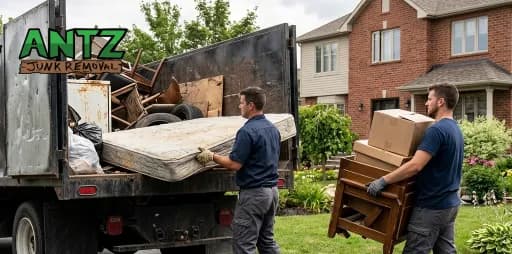
In Junk removal services two or three person unit extracts undesirable things from a residence, garage, storage unit, or job site and arranges them responsibly, often on the same day you call. Some jobs are a single mattress. Others are an entire estate after a move-out. The scope changes, but the basic promise does not: you point, they haul, and the space is clear by the time they leave.
This matters most for people dealing with something time-sensitive a landlord deadline, a home sale closing, or a garage that is finally gotten out of hand. According to guidance from the U.S. Environmental Protection Agency on household waste management, a large share of what homeowners throw away is still usable or recyclable, which is why a competent crew separates loads rather than sending everything straight to a landfill.
The rest of this involves more than just showing up with a truck. It means understanding what items can be recycled, what items require special handling (such as electronics, mattresses and appliances containing refrigerants), and what items local transfer stations accept. That is the thing that homeowners typically don't consider until they are in their garage, filled with all kinds of things, and have no idea where they are going.
Difference Between Junk Removal Services and Everything Else
The single biggest factor that changes what a job looks like is who does the labor. Junk removal services mean the crew loads, hauls, and disposes of everything you don't touch a box. Curbside pickup, by contrast, requires you to drag items to the street yourself, and dumpster rental requires you to fill the container over days or weeks on your own.
For a homeowner dealing with an estate cleanout, or someone with a bad back staring down a basement full of old furniture, full-service is the only option that actually solves the problem. The labor is the service.
Residential junk removal covers the more everyday version of this: garage cleanouts, storage unit cleanouts, old appliance swaps, yard debris after a storm, and furniture that did not survive the move. It is shorter in range than a commercial leave or building debris haul, and many residential bands can walk through, quote the job on sight, and start loading within a similar appointment.
What Actually Happens During a Junk Removal Job
Before the truck even arrives, a good company will take a stroll around the space or request photographs, so that the crew comes with the appropriate size truck and sufficient manpower. Generally, the duration of the job is much more dependent upon having stairs, access to the truck, and having a narrow hall way to work in than upon the number of items. The crew hauling a stack of cardboard down 3 flights is done sooner than the crew hauling a hide-a-bed sofa down 3 flights.
Here's where the three common routes to getting rid of unwanted stuff actually differ:

Dumpster rental still makes sense for a multi-week renovation where debris accumulates daily. But for a one-time cleanout where the goal is "get this gone by Friday," full-service wins on speed and effort every time.
Hidden Factors That Change Scope and Scheduling
The most overlooked factor that people usually neglect to mention when they call is access. Ranch roof with one level and driveway is a simple project. If there is no elevator, and the job is a walk-up on the third floor, the labor math changes completely; most companies will ask about stairs, before giving a quote for the time.
Items matter a lot. Appliances, including refrigerant, like older refrigerator and window AC parts, require EPA-compliant handling under Section 608 of the Clean Air Act until disposition, explaining how many homeowners are unaware that they do not know until they attempt to place one at the curb and the trash service says no. For bulky household appliances, appliance removal can also be part of the cleanout. The disposal method for mattress removal, e-waste disposal, and containers for paint or chemicals is different, and if a crew does not ask, then they are in for a job slowdown or a job that's improperly disposed.
The timing of the season is also an important factor. The busiest time of the year for most hauling companies is around the time of spring cleaning and moving day (late spring through August when leases expire). If you plan a week or more in advance during that period, you can at least get a choice of appointments, rather than whatever you're left with.
Step-by-Step guide | How the Junk Removal Process Works,
So, how does junk removal work from the first call to the empty garage? The junk removal process explained in practical terms looks like this:
Request a quote
Call, text photos, or fill out an online form describing the items and their location in the home.Get a scheduled window
Most companies will have same day or next day appointments and will let you arrive at any time during 2-3 hours.Crew arrives and assesses in person
They will walk the space, confirm the scope matches what was described, and give a final, on-site quote before touching anything.You approve, they load
Once you sign off, the crew does all the lifting no need to move items to a driveway or curb beforehand.Sorting happens at the truck or facility
Usable furniture and electronics often get pulled for donation; scrap metal and cardboard get separated for recycling; the rest goes to a licensed transfer station.Space gets a final sweep
A decent crew leaves the area broom clean, not just empty.Payment and receipt
Payment is typically made once the job is finished, and few businesses give a contribution receipt if items are donated to a native kindness.
Common Mistakes Homeowners Make When Booking
The most common blunder is calling for a quote without specifying stairs, closed halls, or a locked storage unit that needs separate access. That mismatch between what was described and what the crew finds on arrival is the single biggest cause of quote disputes in this industry not because companies are trying to upsell, but because labor time genuinely changes with access.
Another common one: assuming everything goes to a landfill, and either holding onto items that could be donated or, worse, tossing hazardous materials in with everything else. A company that separates loads by disposal type is doing more work on the back end than one that is not worth asking about directly before you book.
Things to Consider Before Hiring a Junk Removal Company
Licensing and insurance. Ask directly whether the company carries general liability coverage. A crew working around stairwells and doorframes in an occupied home is one wrong angle away from a damaged wall.
How they handle disposal. Some companies partner with local donation centers and recycling facilities, giving homeowners more donation options; others send every load straight to the transfer station. If keeping items out of a landfill matters to you, ask before booking, not after the truck's already loaded.
Same-day availability versus scheduled booking. If you're working against a deadline, confirm same-day capacity directly — don't assume it based on the website.
How the quote is built. Some crews quote by truck volume, others by item count or job complexity. Understanding junk removal pricing and which method a company uses helps you compare quotes accurately rather than by a single number that means different things at different companies.
Whether they ask about access before arriving. A company that asks about stairs, elevators, or narrow doorways during the initial call is one that's quoting based on the real job, not a guess.
Answers to Common Questions About Junk Removal
What items won't a junk removal company take?
Few crews want to handle hazardous materials, such as paint, propane tanks, and some chemicals, unless the company makes it a specific offering. Usually, these should be collected through a municipality's household hazardous waste collection rather.
What can be expected during the day of the pickup with a junk removal service?
Arrival time is not an exact time, but rather a window, a brief walk-through on the site to confirm scope and full service loading after the job is approved. Typically, most appointments last between 20 minutes for a single item and a couple of hours for a full garage/estate cleanout.
When to Use a Junk Removal Company vs. Renting a Dumpster?
Use a full-service crew if it is just one time clean out with a deadline, the items are too heavy to move yourself, or you just want them taken away in one trip. For projects that may be weeks long, and debris is accumulating, dumpster rental is more suitable.
Do they take furniture in good condition?
Many companies pull usable furniture and appliances for local donation before the rest goes to a transfer station worth asking directly, since not every company offers this.
How professional junk removal works for larger jobs, like an estate cleanout?
The steps involved in junk removal for a larger job mirror a standard one, just with more crew members and often a longer on-site walkthrough to separate keepsakes, donations, and disposal items before loading begins.
Expert Advice for Homeowners Weighing Their Options
There are two major considerations when deciding between full-service junk removal, a rented dumpster, or doing the job yourself: physical effort and speed of clean-up. Most often, a single cleanout with a deadline in mind will work in favour of full service.
If the debris has been accumulating for weeks, an ongoing renovation will most likely be better for renting a dumpster.
When you should hire a junk removal company is when you have large items you can't move. That is when you should contact a junk removal company. Before contacting companies, it is important to know your project type so that you can send a quote that is relevant to the specific project.
Expert Support for Your Next Cleanout
Antz Junk Removal handles residential cleanouts, garage and storage unit clear-outs, appliance removal, and full-property jobs from estate cleanouts to move-out deadlines, with crews that walk the space, quote on-site, and load the same day in most cases.
Contact Antz Junk Removal at (719) 922-0428 to talk through what you're dealing with and get a real timeframe, not a guess. A company that asks the right questions before the truck shows up is usually the one that gets the job done without surprises.