What Items Can a Junk Removal Company Take and What Can't They?
Learn what junk removal companies can and can't take, including hazardous items, and prepare effectively.
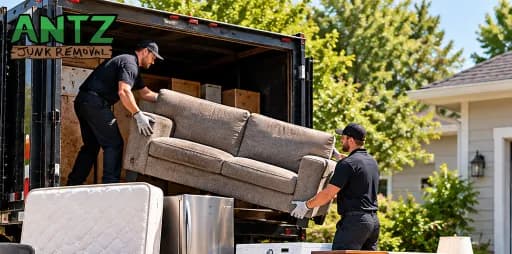
Junk removal services can take most household furniture. They don't sell hazardous materials, a few chemicals that are regulated and need special handling, or any other type of items. The line is not chosen for convenience; it is resolved by local trash regulations and United Hazardous Materials Regulations.
This is something most homeowners discover during their second half of the house-cleaning experience, standing there, a stack of paint cans beside them, and wondering why the crew is reluctant to load the cans. The answer, in short, is liability and disposal law. The longer answer (which is beneficial for planning a pick-up rather than being caught by surprise) depends on the category the item belongs to, and how it is classified in your local landfill or transfer station.
According to guidance published by the U.S. Environmental Protection Agency, domestic dangerous rubbish stuff like dated paint, pesticide, and assured cleansing chemical substance take separate treatment because it can poison underground water or pose a fire risk if it finishes in a standard dumping ground. That is the essential cause of junk haulers, who will happily take your old couch but will not take a can of motor oil.
Batteries fall into a similar bucket. The Call2Recycle program, a nonprofit that coordinates battery recycling across the country, notes that rechargeable batteries in particular can short-circuit and ignite when compacted in a regular truck, which is exactly the kind of risk a junk removal crew is trained to avoid rather than manage on-site.
How Junk Removal Services Decide What They'll Take
Size and weight are not the most important factors. It is a regulatory designation. There are two main types of refuse: common solid waste and regulated waste. This is typically the first standard used to classify trash until consideration of factors such as trip count and weight.
Why Full-Service Junk Removal Covers More Than a Basic Haul
Full-service junk removal means the band does the lifting, loading, and disposal sorting, not just the pickup. That renown issues because categorization is where the real work occurs, splitting what goes to the dumpster from what requires going to a recycling core or hazardous garbage expertise. A fundamental hauling service that just pitches everything in one truck avoids that sorting step, which can create disposal breaches the client never sees approaching but is still scientifically reliable for.
How Residential Junk Removal Requests Differ From Commercial Ones
Residential junk removal jobs tend to involve a wider mix of item types in a single visit furniture yard debris, old electronics, and boxes of miscellaneous stuff from a garage cleanout, all in one load. Commercial cleanouts are usually more uniform and involve fewer of the tricky "is this allowed" judgment calls that come up constantly in a residential garage or attic.
What Items Can a Junk Removal Company Take?
Most junk removal services will take anything that is non-hazardous and fits through a standard doorway or can be broken down to fit. That covers a wide range of household items that most people don't think twice about.
The Junk Removal Accepted Items List, Category by Category

Items Accepted by Junk Removal Companies in Most Service Areas
Items accepted by junk removal companies almost universally include old furniture, exercise equipment, broken appliances, and general garage or basement clutter the stuff that is heavy or bulky enough that curbside trash pickup won't take it, but isn't restricted by any waste ordinance.
Everyday Household Items Junk Removal Companies Remove Most Often
Household items junk removal companies remove on a near-daily basis include old couches, mattresses, treadmills, dining sets, and the accumulated boxes from a move or an estate cleanout. None of these requires special disposal permits, which is why they make up the bulk of a typical job.
What Items Can't Junk Removal Companies Take?
The list of exclusions is shorter than most people expect, but it covers items with real safety or environmental risk if a standard junk removal services truck hauled them alongside everyday household waste.
image
Most of these require a licensed hazardous waste facility rather than a standard landfill which is a disposal pathway junk removal companies typically aren't permitted to use for general loads.
What Can Be Removed by Junk Removal Services in a Single Trip?
Volume, not item count, is usually the limiting factor. What can be removed by junk removal services in one visit typically depends on truck capacity, which is often measured in cubic yards rather than by the number of items. A single small pickup truck load and a full 20 yard trailer load are priced and scheduled very differently.
How to Prepare for a Junk Removal Pickup
Sort items into keep, donate, and haul-away piles before the crew arrives
This cuts on-site decision time significantly.Separate anything on the prohibited list into its own area
Set hazardous items aside so the crew can flag them immediately instead of finding them mixed into a general pile.Measure doorways and stairwells for oversized furniture
A sectional sofa that won't clear a stairwell corner needs disassembly planned ahead of time, not discovered mid-move.Photograph anything unusual and ask ahead of time
A quick text photo of an old fuel tank or a questionable appliance saves a wasted trip if it turns out to be excluded.Clear a path from the item to the truck
Rearranging furniture or moving a car out of the driveway beforehand speeds up loading considerably. For a fuller look at the junk removal process, homeowners can review what typically happens from the initial request through loading and disposal.
Things to Consider Before You Book a Junk Removal Services
Whether any items fall into a regulated category
Walk through your space mentally before calling paint cans, old propane tanks, and chemical bottles change the scope of the job.
How much volume are you actually dealing with
A single overstuffed closet and a full basement cleanout are very different jobs, and knowing roughly how much you have helps the crew show up with the right size truck.
Whether appliances still contain refrigerant
This affects both what a crew can legally load and how the item eventually gets processed.
Answers to Common Questions
What items can a junk removal company take that curbside trash pickup won't?
The most typical examples are bulky furniture, large appliances and oversized items that are beyond the weight or size limits for regular garbage pickup. The amount that is collected on the curb is limited by both weight and number of items; a junk removal crew can take a full load in one trip.
What can not be picked up by junk collection services?
Almost everywhere, the most common hazardous chemicals, ammunition, medical waste, and any materials containing asbestos, which need to be disposed of in a licensed disposal facility and not a landfill.
Will a garbage removal team pick up small scale building waste?
Typically yes, but for moderate amounts such as drywall scraps or old cabinetry, or a large renovation with lots of debris, a full dumpster hire will be necessary rather than just a single trip in the truck.
Do junk removal companies recycle anything or does it go into the trash?
Electronics, metal and some appliances are not put into the garbage but recycled because sometimes these items need special processing. This will vary depending on the item and available facilities.
Is there a size limit on individual items?
Not usually, as long as the item can be broken down or maneuvered out of the space. A crew experienced with residential jobs will typically disassemble a bed frame or sectional sofa rather than turn away a job over doorway clearance.
Expert Advice for Homeowners
The decision that saves the most time is not which company to hire but doing a five-minute walkthrough of your space beforehand and separating anything that might be regulated waste from everything else. A little pre-sorting is a lot of help and a junk removal services moves much faster when they don't have to decide on a piece-by-piece basis at the job site. When in doubt, it's best to call in advance before the truck arrives, rather than an unnecessary trip.
Expert Support for Your Cleanout
Antz Junk Removal offers junk removal services for residential junk removal, appliance removal and complete property junk removal, and sorts all items accepted for proper disposal or recycling as they go. Call Antz Junk Removal at 719-922-0428 to discuss your junk removal project. Typically, when the truck arrives, a quick description of the space types and the items will suffice to scope the job properly.
Sources
U.S. Environmental Protection Agency (EPA) — Provides official guidance on proper waste management, recycling practices, and the safe handling of hazardous materials to protect human health and the environment.
Call2Recycle — Offers trusted information on battery collection, recycling programs, and responsible disposal methods for rechargeable batteries across North America.
Institute of Scrap Recycling Industries (ISRI) — Shares industry standards, recycling best practices, and educational resources on the safe recovery and recycling of scrap materials.