How to Prepare for a Junk Removal Appointment
Prepare effectively for junk removal with sorting and accessibility tips. Ensure a quick, hassle-free experience for both you and the crew.
A junk removal appointment goes faster and costs you less hassle when items are sorted, accessible, and clear of anything the crew isn't supposed to touch. That's the short version. Most of the friction people run into with junk removal services, confusion about what's included, crews having to reshuffle a truck mid-job, traces back to prep that didn't happen the night before.
The great thing is that you don't have to work a whole weekend to make things ready for pick-up. It means knowing exactly what a crew needs from you and performing those particular few things without guessing. This guide has you covered on what to expect, how to get your stuff organized and what to avoid doing to make an appointment a longer one.
Guidance from agencies such as the EPA Household Hazardous Waste Guidance typically suggests separation of recyclables, electronics and household hazardous waste prior to the scheduled bulk pick-up, which is applied directly to private contractors.
A private junk removal services provider can usually process mixed items that local waste programs won't, and it's best to have an idea of your municipality's restricted-item list before they get there, so you can flag anything the removal crew might need extra time on to handle, such as appliances that contain refrigerants.
What Actually Happens During a Junk Removal Appointment
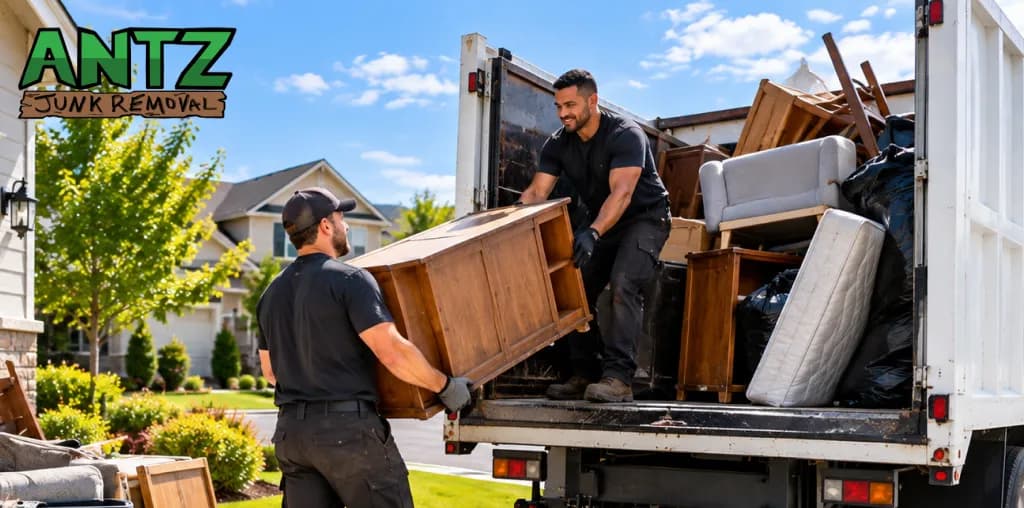
A crew comes and walks the space with you to ensure you're leaving what they are looking for, tells you the scope for the job, and loads the truck. That's the essence of any junk removal service, from eliminating a single mattress to a whole garage cleanout.
The walkthrough is the part people underestimate. It's when the crew figures out load order heavy and awkward items first, boxes and loose debris last and when they'll ask questions if something looks like it might need special handling, like a CRT television or a propane tank. If everything's already staged and visible, this step takes minutes. If items are scattered across three rooms and a shed, it takes a lot longer, and that time gets built into how the appointment runs.
Residential Junk Removal vs. Full-Service Junk Removal: Which Prep Applies to You
Residential junk removal typically refers to a specific selection of junk items such as a couch, some boxes, and yard trash following a clean-out from within a house or house.
Full-service junk removal usually covers wider jobs such as whole-house cleanout services, estate cleanout services or hoarding level jobs, in which the crew is making more of the decisions within the house.
The prep expectations differ. A residential job benefits from items being staged near an exit point garage, driveway, or curb since the crew's main job is loading, not searching. A full-service job leans more on the crew itself, but even then, flagging which rooms are off-limits and which items are keepers saves real time, especially in a house where not everything is obviously trash.

Your Junk Removal Preparation Checklist
A short list, done the night before, prevents almost every delay a crew from junk removal services runs into on arrival:
Group items by category
Furniture, electronics, yard waste, general debris, even if they're staying in place until pickup.
Separate anything hazardous
Paint cans, batteries, propane tanks, old fluorescent bulbs. Crews often can't take these without advance notice or may need to exclude them entirely.
Clear a path from the items to the driveway or nearest exit
Narrow hallways and blocked stairwells slow a two-person crew down significantly.
Items with sentimental or resale value
Looks similar to trash. A crew moving fast will treat anything unflagged as fair game.
Confirm parking
A truck that can't get within reasonable carrying distance turns a 45-minute job into ninety.
This is the version of a junk removal preparation checklist that actually holds up on appointment day, because it focuses on access and sorting rather than deep cleaning that part isn't the homeowner's job.
Do I need to move items before junk removal arrives?
Not entirely, but partially, yes. Most junk removal services expect to do the heavy lifting and loading themselves. What they need from you is decision-making done in advance — which items go, which stay and reasonable access to wherever those items are sitting.
If a couch is in a finished basement with a tight stairwell, the crew still handles the physical move, but knowing about that stairwell ahead of time changes how they plan the job and how long it takes. That's the real answer to what to do before junk removal arrives: less about carrying things yourself, more about removing the guesswork.
How to Organize Junk Before Pickup | Step by Step
Walk through the property and make a list of everything leaving, room by room.
Separate hazardous or regulated items electronics, batteries, and chemicals into their own labeled area.
Group remaining items by size and type that large furniture together, boxed or bagged debris together.
Move grouped items as close to the pickup. This point as is reasonably safe to do alone.
Take a few photos of the pile or the rooms involved; especially for larger jobs this helps if there's a scope question on arrival.
Confirm the appointment window and make sure someone is available to walk the crew through on-site.
Common Mistakes That Slow Down a Junk Removal Appointment
With most junk removal services, the biggest mistake is treating the appointment like a drop-off rather than a pickup. Homeowners sometimes assume the crew will hunt through a garage or attic to figure out what's leaving. That's not how most appointments work. The crew removes what's identified, and unclear boundaries mean either the wrong items get taken or the right ones get missed.
Another common issue is underestimating access problems. A truck parked on the street, a gate that's locked, a stairwell that's narrower than it looks in daylight add real time to a job that would otherwise be straightforward. And mixing hazardous items into general piles is a mistake that can stop a job mid-load, since crews often have to exclude anything they can't legally transport once it's flagged. For additional information on responsible waste handling, homeowners can review National Waste & Recycling Association Resources.
Things Worth Weighing Before Your Appointment
Volume vs. access
A large volume of small items sometimes takes longer than a smaller volume of large ones, especially if the small items are scattered across multiple rooms rather than staged in one spot.
Timing around your schedule
Morning appointments with most junk removal services tend to have more flexibility if something runs long, since there's less stacked behind them later in the day.
What's actually included
Some jobs involve items that need special handling, such as mattresses, appliances with refrigerant, electronics and confirming that ahead of time avoids a surprise exclusion during the walkthrough.
Who needs to be present?
For residential junk removal, a homeowner being on-site for the initial walkthrough, even briefly, resolves more questions than a text thread would.
Property condition on arrival
Pets, loose cords, or slippery walkways near the pickup path aren't dealbreakers, but flagging them ahead of time keeps the crew moving instead of navigating around surprises.
Questions Homeowners Ask About Junk Removal Appointments
People tend to have a handful of the same questions before their first appointment with junk removal services for instance, whether they need to be home the entire time, or whether a partial cleanout is even worth scheduling compared to doing it themselves.
How to prepare for a junk removal appointment?
Not necessarily, but someone should be available for the initial walkthrough to confirm scope. After that, many homeowners step away while the crew loads.
Is there something that was not originally intended to be included in what happens during a junk removal appointment?
It will typically be marked and a question asked before it is placed on the load, especially when it alters the scope of the load or contains a hazardous material.
May I put furniture, yard waste and electric items in the same pile?
It's possible but it will help the walkthrough process and minimize the risk of things being missed or mishandled.
Are there any items that I should not take out for collection?
Not all items can be transported the same way; for example some items that contain hazardous chemicals may need to be identified separately, and some appliances need to be identified separately from other items.
So what are the best tips for a successful junk removal service appointment?
Do as much as possible to stage, sort hazardous materials separately, check parking/access and have a person at the walkthrough. The above four are the major contributors to delays.
Getting the Most Out of Your Junk Removal Service
The appointments that go smoothest share a pattern: items are grouped, access is clear, and someone's available to answer questions during the initial walkthrough. None of that requires special equipment or a full day of prep it's mostly about making decisions ahead of time instead of during the appointment itself. Homeowners who treat the crew's arrival as a pickup, not a search-and-sort mission, consistently get through their junk removal services appointment faster and with fewer surprises on the final invoice or scope.
Schedule Your Junk Removal Appointment with Antz Junk Removal
Antz Junk Removal provides junk removal services for both residential pickups and larger full-service cleanouts, including sorting support for jobs where the volume or condition of the space makes DIY prep impractical. Contact Antz Junk Removal at 719-922-0428 to discuss your specific needs and get a walkthrough scheduled. A crew that knows what it's walking into on day one tends to leave that job faster and with fewer follow-up questions than one working from a vague description over the phone.
Sources
U.S. Environmental Protection Agency (EPA) – Household Hazardous Waste
Provides guidance on safely handling and disposing of paints, cleaners, oils, batteries, pesticides, and other household hazardous waste.
U.S. Environmental Protection Agency (EPA) – Electronics Donation and Recycling
Explains responsible options for donating and recycling electronics such as computers, televisions, and other electronic equipment.
National Waste & Recycling Association (NWRA) – Waste & Recycling Resources
Offers industry resources and safety guidance covering waste handling, recycling, batteries, and other materials.